A sales sidekick should help turn that research into a clear reason for a conversation. The output needs to be more than a profile summary with a flattering opening line.
For Socraty, Sales Sidekick is a bespoke workflow available to scope. The examples below describe how I would approach a build, rather than features of a ready-to-install product.
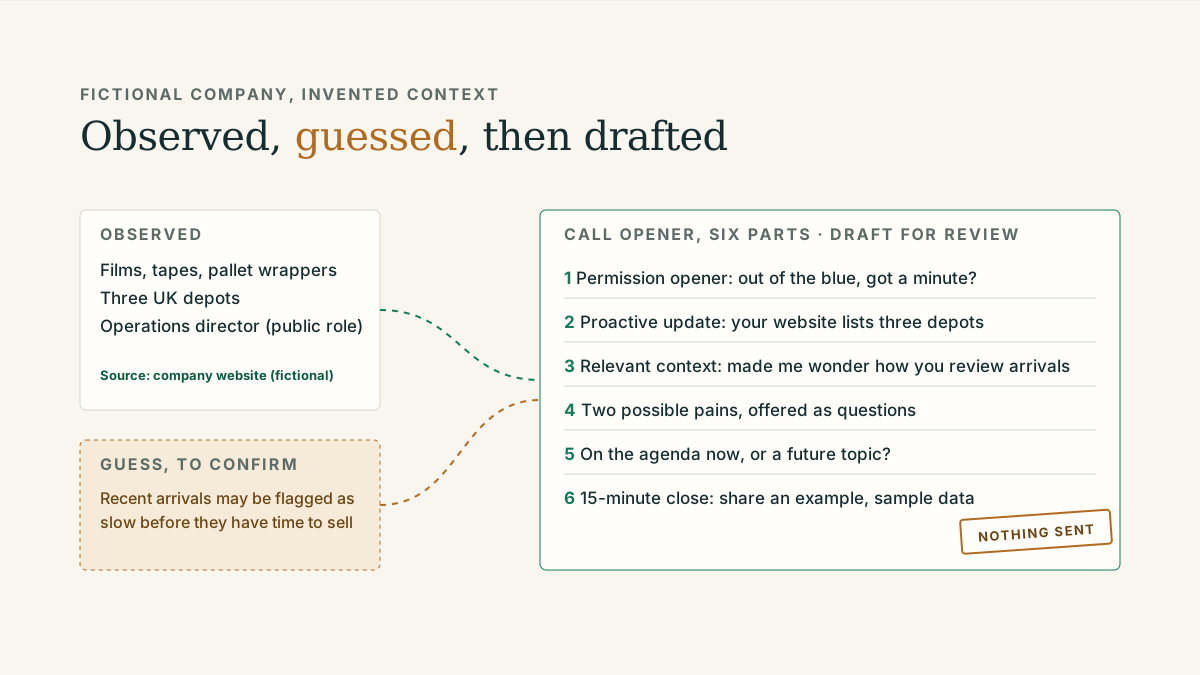
Separate what you know from what you suspect
A job title tells you something about a person’s role. It does not tell you their current priorities, purchasing authority or whether their team has the problem you solve.
A useful brief separates verified facts from hypotheses. It might record that the business distributes technical products and offers a large online catalogue. It could then suggest asking whether product enquiries take time away from account work. It should not claim the business is losing sales because its catalogue is difficult to use.
That discipline keeps the research helpful. Each factual statement should have a source the salesperson can open. Missing information should remain missing, rather than becoming a confident guess.
Turn the research into a conversation
The call opener should still sound like a person. Ask permission, explain why you are calling and offer a relevant comparison. Then ask a question that lets the prospect tell you whether the problem exists.
Here is an illustrative structure for a distributor:
“Hi Alex, it’s Mumin from Socraty Consulting. I know this is out of the blue. Have you got half a minute for me to explain why I called?”
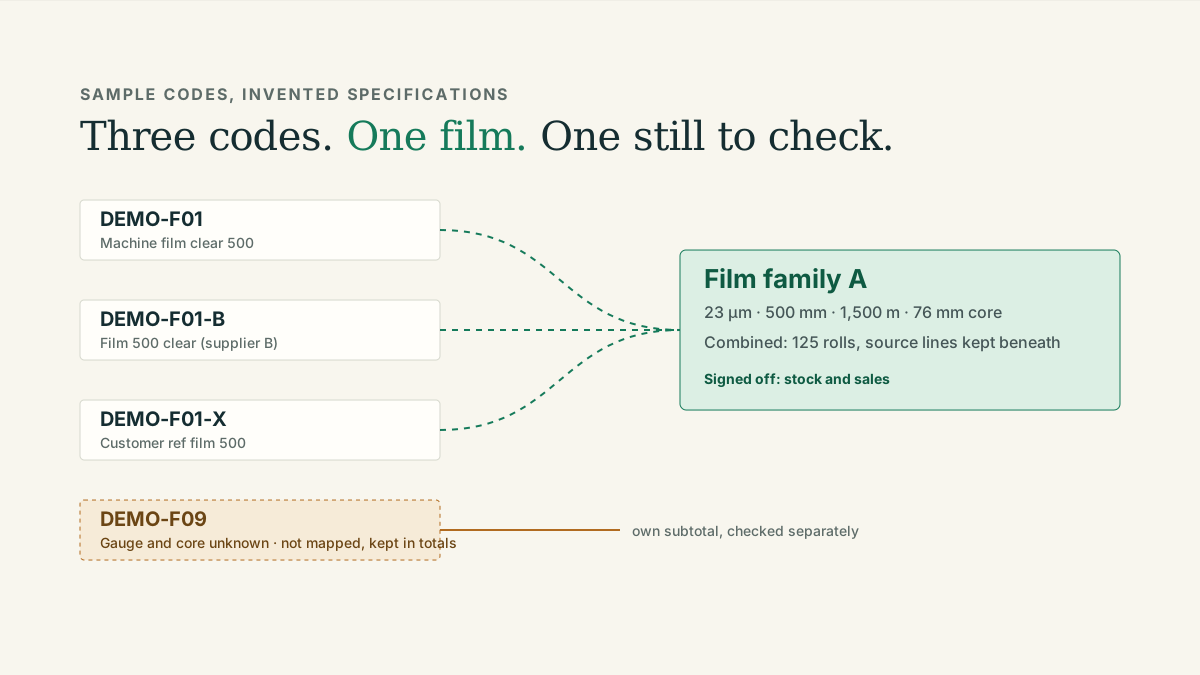
“I’m speaking with suppliers about using their existing business information in an internal AI assistant. I’ve worked on this with a supplier where stock questions meant checking several reports, and equivalent product codes needed to be understood together.”
“Is reducing that sort of manual work on your agenda now, or more of a future topic?”
If it is relevant, the next step can be a 15-minute exchange of examples. If it is not, the script should make it easy to end politely. The purpose of research is to earn a useful question, not to manufacture urgency.
Keep the email short enough to check
A sidekick can use the same verified context to draft a short email. The salesperson should be able to see why each sentence is there: a relevant observation, a specific problem to explore and a modest next step.
Remove claims that depend on information you do not have. A company announcement does not prove a budget exists. A senior title does not prove someone owns the workflow. A personalised message is only useful if its premise is sound.
For an initial build, I would keep sending under the salesperson’s control. Drafting and reviewing are a clear, testable scope. Automatic outreach introduces a different set of operational decisions.
Make the browser workflow earn its place
The sidekick should reduce the effort of moving between research and preparation. That could mean collecting selected public company information and approved CRM context, then producing a brief, call outline and email draft beside the page the salesperson is already using.
Access needs to be scoped to the sources involved. A browser extension should not need unrestricted access to every page simply to prepare a company brief. Company research also should not be described as formal KYC unless a separate compliance process has actually been designed for that purpose.
Test the workflow on a small set of accounts. Compare preparation time, factual corrections and how often the draft needs rewriting. Later, assess whether the conversations are better qualified. More generated messages alone would be a poor success measure.