The figures exist. Getting them into a usable answer is the work.
An internal AI assistant can help with that process, provided it has the right records and the business rules needed to interpret them. The useful starting point is a question your team already needs to answer, with an output somebody can check.
Start with the decision somebody has to make
Stock reordering and customer follow-up are different jobs. A purchasing colleague wants to know whether available stock will cover demand until the next delivery. An account manager wants to know whether a regular customer has stopped buying. Both may use sales history, but they need different calculations and different next steps.
For replenishment, a useful assistant might bring together recent demand, free stock, stock already on order and lead time. The output should show which records it used, which period it covered and any missing information. A recommendation without those details is difficult to trust.
In my work on an internal assistant for a supplier, the implementation exposed how much this depends on business context. Product codes could not always be treated as separate products. Recent stock receipts changed the interpretation of slow movement. Reading the spreadsheet correctly was part of the job, rather than something to assume.
The business rules are part of the answer
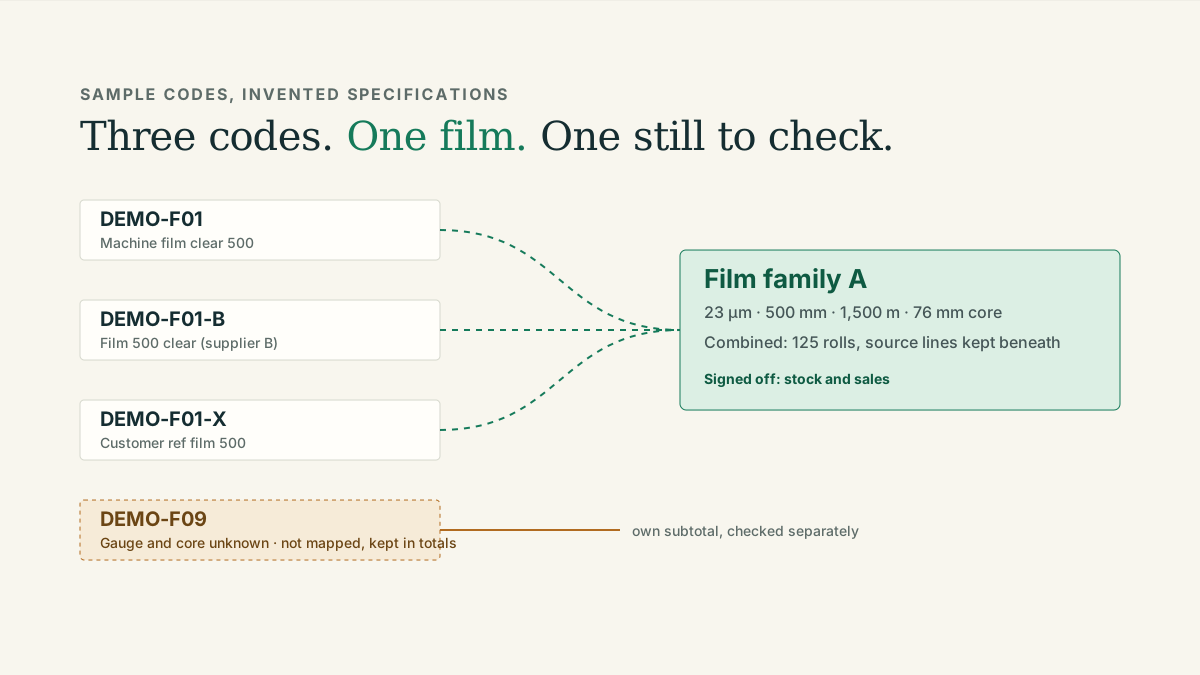
Consider an illustrative example. Two supplier codes refer to equivalent products. One code shows frequent sales and the other appears quiet. If you review them independently, the second code may look like unwanted stock even though the underlying product sells regularly.
A useful process needs an approved mapping between those codes. It may also need to distinguish stock reserved for a particular customer from stock available to everyone else. Similar descriptions alone are not enough to establish that products are interchangeable.
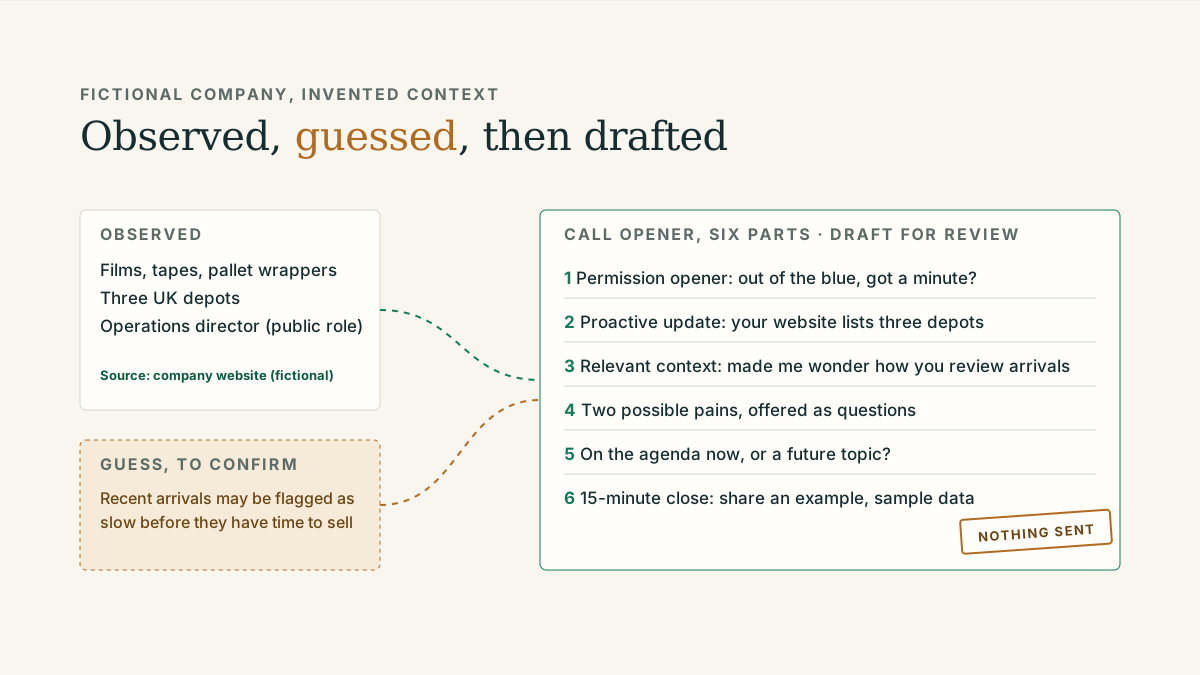
Recent receipts create another trap. No sales since a delivery arrived yesterday tells you much less than no movement over several months. An assistant should apply the agreed time window and identify recent arrivals, rather than attaching the same warning to both.
Give colleagues a shared place to ask and check
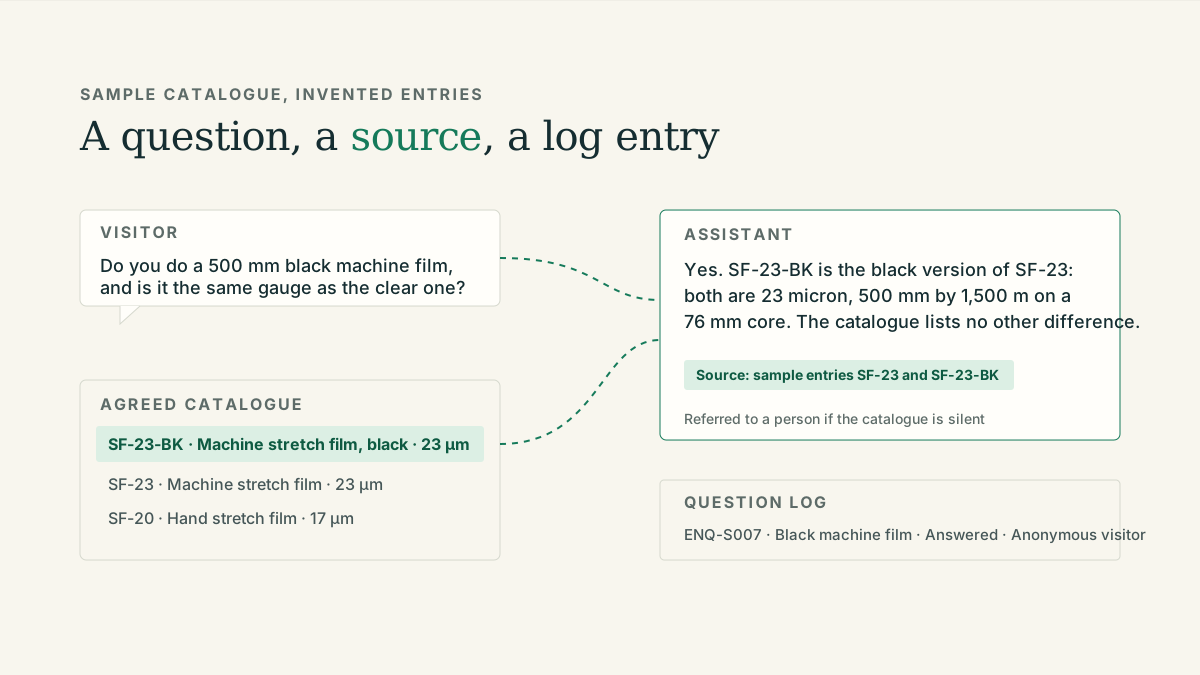
The same assistant can make product manuals, internal guidance and saved business rules available alongside structured reports. That matters when a question needs both a calculation and an explanation: which stock is available, and why does this customer use a different code?
Shared knowledge also needs an owner. Someone must decide which documents are current, who can see them and which corrections should become a team rule. Adding a note should not silently override an approved policy. Keeping the source and update date visible gives colleagues a way to challenge an answer.
This is what makes a company-specific assistant useful beyond a collection of separate chat accounts. It can be configured around common information and agreed working practices. Its reliability still depends on the quality of those inputs and the checks built around them.
Prove one workflow before widening the brief
Choose a small set of questions for which the team already knows the correct answer. Include awkward cases: a renamed customer, equivalent codes, a recent delivery and a workbook with several tabs. Compare the assistant’s output with the checked answer, including totals, exclusions and source records.
Measure the time needed to reach an approved decision, including checking and correction. A fast first response is not a saving if a colleague then has to rebuild the analysis.
A sensible first project ends with a working workflow, documented rules and a clear handover. It gives you a basis for deciding what to add next.